
 Gifts

Citrine Effect: Meaning, Energy & Jewelry Guide 2026
Citrine Effect in healing stone lore: the sun-yellow quartz stands for joy of life, self-confidence, and positive life energy.
Citrine Effect: Meaning, Energy & Jewelry Guide 2026
By Mira Fiore · NemoMatheo Jewelry Editorial Team · 8. June 2026

Citrine — the golden-yellow quartz, traditionally considered "captured sunlight."
At a glance: What is Citrine?
Citrine is a rare yellow variety of quartz, colored by tiny iron particles. In stone tradition, it is described as a "sunstone" and associated with the solar plexus chakra, self-confidence, and a warm, optimistic basic tone. Jewelry with citrine carries this sunny symbolism directly on the body.
Quick Facts
- Color: Light lemon to deep honey yellow, sometimes with a slight orange tint
- Mineral Family: Quartz variety (SiO₂ with traces of iron)
- Chakra: Solar Plexus (Manipura) — center of willpower and self-worth
- Symbolism: Sunstone, Stone of Light, "Merchant's Stone" of tradition
- Trend 2026: warm gold tones and sunny gemstones are making a strong comeback in boho and quiet luxury jewelry
Table of Contents
- What is Citrine?
- Citrine Effect in Tradition
- Citrine Meaning Through Cultures
- Wearing Citrine in Everyday Life
- Who should wear Citrine?
- Combining Citrine with other stones
- Care & Cleaning
- Citrine Jewelry at NemoMatheo
- Frequently Asked Questions
What is Citrine?
Citrine is one of the rarest and most sought-after varieties of the large quartz family. Its name is derived from the Latin citrus — the word for lemon, whose bright yellow gives the stone its identity. Mineralogically, citrine is silicon dioxide (SiO₂), which gets its characteristic honey-yellow to golden-orange color from minute traces of iron in the crystal lattice.
The most important deposits for genuine, natural citrine are in Brazil (especially in the states of Rio Grande do Sul and Minas Gerais), in Madagascar, in Russia as well as in smaller quantities in Spain, France, Scotland, and the USA. Natural citrine is extremely rare in nature — most stones offered on the market today are heat-treated amethysts: If amethyst is heated in a controlled manner to 400 to 500 °C, its crystal structure changes, and the violet hue transitions into a warm yellow to orange. These heat-treated stones are not fakes — they remain genuine quartz — but they usually appear more intensely and uniformly colored than the rather delicate yellow of natural citrine.
With a Mohs hardness of 7, citrine is one of the more robust gemstones and is excellently suited for daily jewelry use. Its clear, glassy luster and high light transmittance make it a rewarding stone for faceted cuts — from the classic teardrop to baguette and marquise cuts.
Natural or heat-treated — how to tell the difference? Natural citrine usually shows a paler, slightly smoky or lemon-greenish undertone, while heat-treated stones tend towards a warmer orange, often reminiscent of Madeira wine. Pointed, light smoky quartz tips at the lower end of a crystal are a classic indication of heat-treated goods — in the jewelry industry, this indication is almost standard. Nevertheless, both variants are genuine quartz, both are sold as "citrine," and both unfold the same symbolic radiance. More important than the heat-treatment question for most wearers is honest information about origin and processing.
Citrine Effect in Tradition
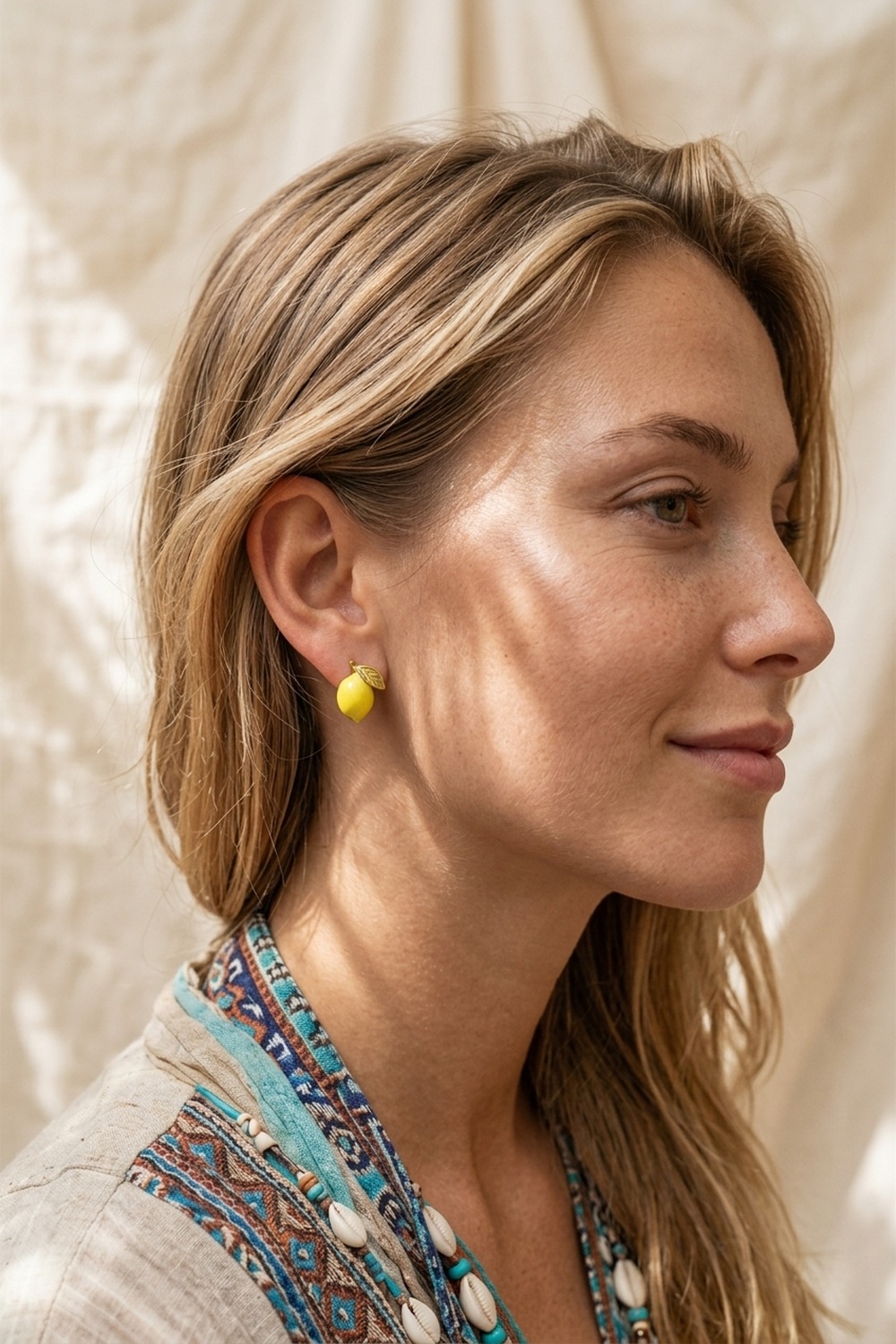
In traditional stone lore, the citrine effect has been described for centuries on several levels — always closely linked to the symbol of the sun. Whoever holds citrine in their hand, in a sense, holds a piece of captured daylight: warm, clear, and untroubled.
On the mental level citrine is associated in esoteric tradition with clarity, concentration, and an optimistic attitude. According to tradition, it is said to help dispel cloudy thoughts and focus on the essentials — a reason why it is traditionally valued by artists, writers, and people in creative professions.
On the emotional level the stone tradition describes citrine as an "inner sunbeam." It is said to strengthen the feeling of joy of life, lightness, and a warm self-worth. Especially during the darker months, many people like to turn to sunny stones for this reason — as a symbolic counterpart to the short daylight.
On an energetic level citrine is assigned to the Solar Plexus Chakra (Manipura) This energy center is traditionally located above the navel and stands for willpower, self-confidence, and one's very personal "inner center." It is precisely here that the golden-yellow stone is said to unfold its ordering, strengthening symbolic effect.
In historical tradition, citrine is also considered the "Merchant's Stone": Merchants used to carry it in their purses because it was said to attract wealth, a good sense of opportunity, and generous energy. This symbolism continues in modern jewelry to this day.
Important note: Citrine and other healing stones are not remedies and are not a substitute for medical or psychological advice. The effects described here are traditionally handed down, esoterically influenced, and not scientifically proven.
Citrine Meaning Through Cultures
The Citrine Meaning is closely linked to the worship of the sun — and thus as old as humanity itself.
Antiquity: Rome as the birthplace of the "Sunstone." Already the Romans valued the honey-colored quartz and poetically called it "captured sunlight." They cut it into signet rings and amulets, which wealthy citizens wore as a sign of status and divine favor. Its yellow shimmer was associated with the sun and with Apollo, the god of light.
Middle Ages: Citrine in Goldsmithing. In the European Middle Ages, citrine was a popular gemstone in goldsmiths' workshops. Since it often visually resembled fine amber or topaz, it was often used as a more affordable alternative for ceremonial jewelry. In ceremonial robes and in reliquary work, its warm yellow symbolized divine light.
19. Century: the Victorian Citrine Boom. Citrine experienced its true heyday in Victorian England. Queen Victoria loved the Scottish highland fabrics and the yellow quartz mined there — and her taste influenced all of Europe. Citrine became a fashion phenomenon: in brooches, necklaces, tiaras, and Cairngorm jewelry. This Victorian wave has given the stone its reputation as a timelessly elegant "sun stone" to this day.
Even in the modern jewelry world, citrine stands for an optimistic, warm basic attitude — far from cool anonymity. In the symbolic language of current boho and quiet luxury trends, it is the stone that makes an outfit shine.
Wearing Citrine in Everyday Life
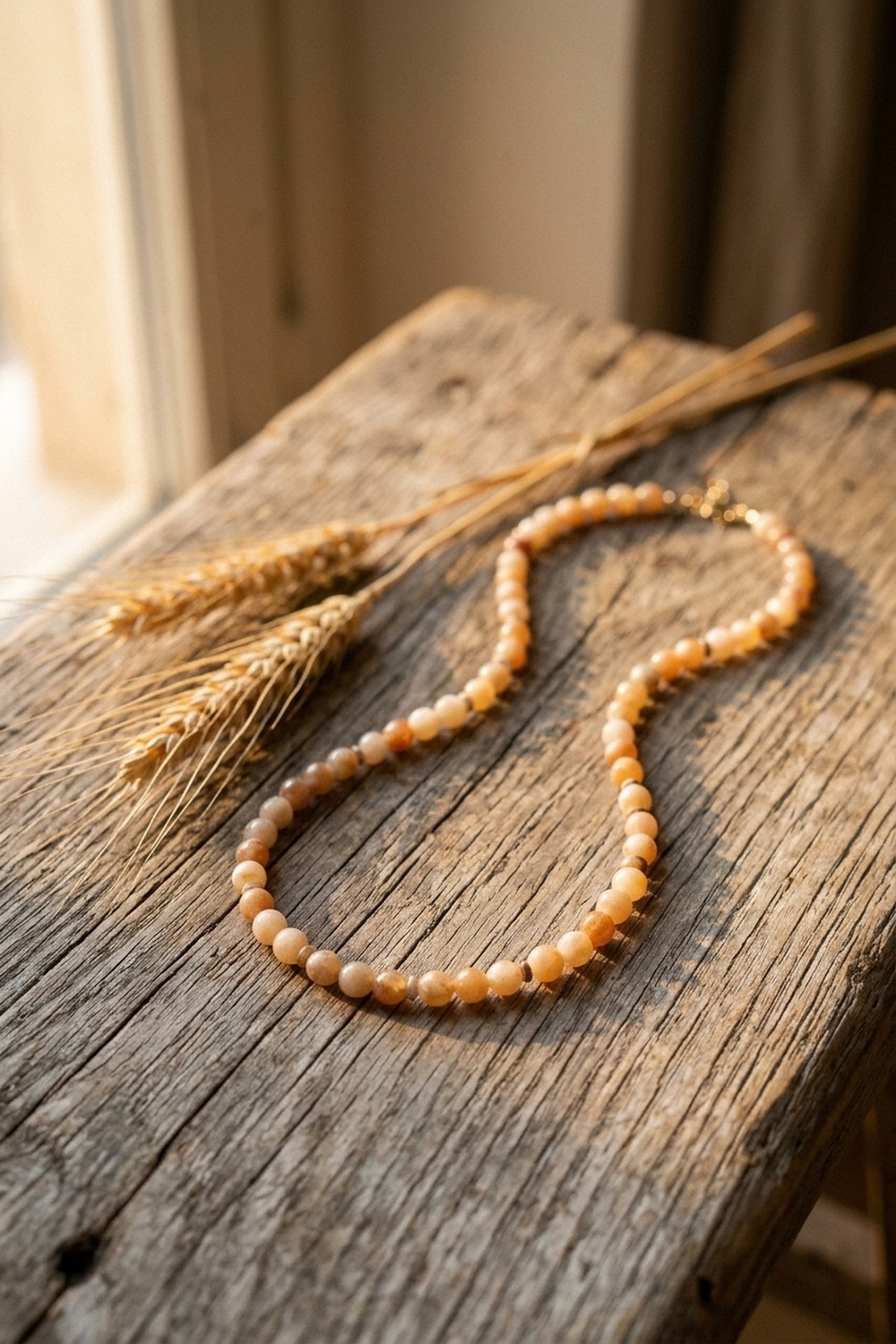
With its hardness of 7, citrine is an exceptionally suitable gemstone for everyday wear. Where you wear it depends on which effect you want to emphasize symbolically:
- Around the neck (necklace/pendant): The stone sits close to the heart and solar plexus — the classic position to emphasize the sunny, self-worth-strengthening symbolism. Long necklaces allow the citrine to rest directly over the solar plexus.
- On the ear (earrings): Citrine earrings frame the face with warm light and are the perfect "mood upgrade" for gray days. Particularly delicate skin tones benefit from the gold reflection.
- On the wrist (bracelet): In the field of vision of the hands — clearly visible when working on a laptop, writing, creating. A subtle reminder of one's own creative power.
- On the finger (ring): A citrine ring acts like a small statement of sunshine, ideal as a personal talisman for important meetings, presentations, or appointments.
For everyday wear, we recommend delicate pieces from our Gemstone Jewelry Main Collection that can be easily layered and harmonize with delicate gold accents.
Who should wear Citrine?
Citrine is an amazingly universal stone — but there are five phases of life in which it is particularly favored:
- Career launch. When starting a career, getting a promotion, or becoming self-employed: Citrine is considered the "stone of visibility" and motivation. Many people wear it during important conversations as a personal courage talisman.
- Creative period. For artists, designers, writers, and all who work with ideas, citrine is traditionally considered a companion of inspiration and creative flow. A citrine on the desk or wrist becomes a gentle reminder of one's own creativity.
- New beginnings. After moving, separations, or life changes, citrine symbolically accompanies the path into the light in stone lore. It is said to remind us that every end opens a new possibility.
- Winter months. When daylight becomes scarce and moods darken, citrine is considered a "wearable sun." Many people appreciate its warm hue, especially in the low-light months between November and February.
- Confidence boost. In phases where self-confidence wavers — before performances, in new social contexts, during major changes — citrine is described in esoteric tradition as a gentle amplifier of inner balance.
Whether you believe in its symbolic effect or simply wear the stone for its beauty — both are correct. Jewelry can be a silent ritual.
Combining Citrine with other stones
Citrine unfolds its warm energy particularly beautifully in combination with other gemstones. Three combinations have established themselves in boho jewelry culture:
- Citrine + Tiger's Eye — the double sunstone. Both stones are considered classic light stones: citrine brings the bright, clear sunny yellow, tiger's eye the warm, earthy golden brown. Together, they form a powerful symbolic duo for self-confidence and visible presence. Learn more in our Tiger's Eye Effect Guide.
- Citrine + Amethyst — Yin & Yang in purple and yellow. A particularly elegant combination, as both stones belong to the same quartz family and wonderfully complement each other in their symbolism: Amethyst stands for calm and clarity, citrine for activity and warmth. Together, they are the chromatic opposite pair par excellence.
- Citrine + Smoky Quartz — grounding meets sun. Smoky quartz is traditionally described as a grounding, stabilizing stone. Combined with the luminous citrine, it creates a jewelry set that symbolizes both groundedness and optimism — ideal for people balancing between many worlds.
If you prefer to wear the protective, dark Yin side of quartz separately, you can find additional inspiration in our Obsidian Effect Guide.
Care & Cleaning
Citrine is a robust stone — with one important peculiarity: It is UV sensitive. Both natural and heat-treated citrine can lose its color and become paler with prolonged, intense sun exposure. Therefore, care for your citrine jewelry as follows:
- UV protection: It is best not to wear citrine jewelry for hours in direct midday sun. Store it in a closed jewelry box or pouch — not openly on a sunny windowsill.
- Cleaning: Lukewarm water with a drop of mild soap cleaner and a soft cloth are perfectly sufficient. Ultrasonic baths and steam cleaners should be avoided — they can cause fine inclusions to crack.
- Remove before: Sports, sauna, swimming pool, showering, housework with aggressive cleaners, perfume and cream application. Perfume often leaves a dull film on citrine.
- Energetic Cleaning: In esoteric tradition, it is recommended to occasionally clean citrine under lukewarm running water. For "charging," short, indirect morning light is suitable — please doesn't the blazing midday sun.
- Storage: Separated from harder stones like sapphire or topaz, ideally in a soft jewelry pouch, to prevent scratches.
Citrine Jewelry at NemoMatheo
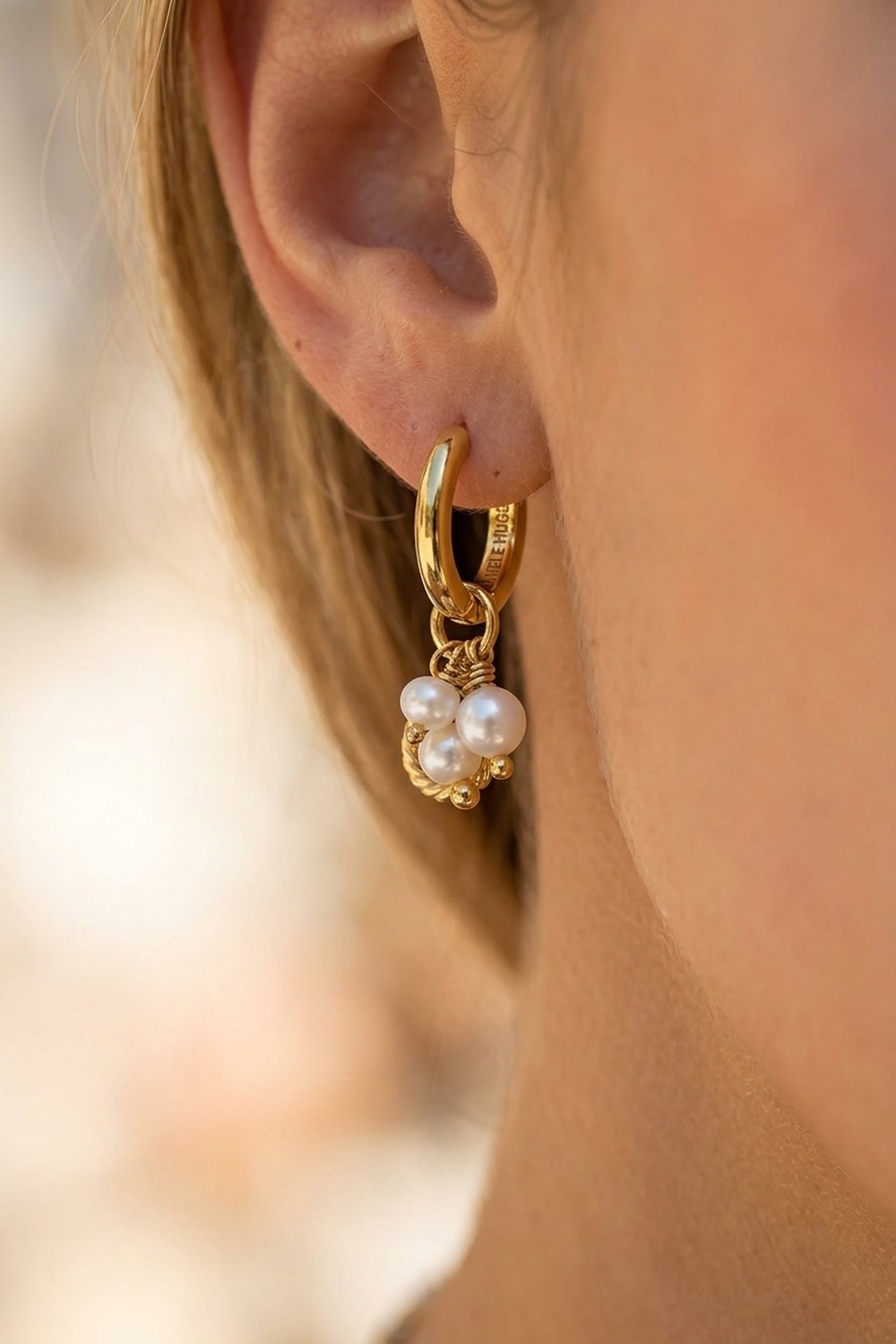
At NemoMatheo, all jewelry pieces are created in small batches, handcrafted and combined with high-quality 18K gold-plated stainless steel . These three pieces particularly beautifully play with the sunny energy of citrine — and are perfect for anyone who wants to add a warm light accent to their jewelry box:
1. Limonella — Asymmetrical Citrine Lemon Earrings
Our Limonella Citrine Earrings (EH39) are a small declaration of love to summer: two delicate citrine drops of different lengths, combined with playful lemon motifs. Asymmetry as a design statement — sunny, cheeky, unmistakable.
2. Miele — Golden Huggie Earrings
The Miele Huggie Earrings (EH34) are the perfect everyday companions: small, close-fitting hoop earrings in honey-warm gold. They carry the sunny symbolism of the citrine color spectrum in a minimalist, everyday wearable form.
3. Sonnenreise — Handmade Natural Stone Necklace
Our Sonnenreise Necklace (XL58) is a tribute to all sunstones — a handmade natural stone necklace that combines warm yellow and amber tones. A small, wearable journey into the light — ideal as a gift or self-care piece.
You can find more matching pieces in our Natural Stone Jewelry Main Collection and in the Natural Stone Necklaces category.
Frequently Asked Questions
How do I know if my citrine is real?
Natural citrine is usually a delicate light lemon to pale honey yellow and often shows slight color variations within the stone. Heat-treated citrines (from heated amethyst) appear more intensely orange and very uniformly colored. Both are real quartz and not "fake." A clear luster, a Mohs hardness of 7, and a cool touch indicate real citrine. When buying, pay attention to origin information and reputable suppliers.
Which zodiac sign suits citrine?
Traditionally, citrine is associated with the zodiac signs Leo, Gemini, and Virgo — zodiac signs that are said to possess warmth, joy of communication, and analytical clarity. Regardless of the zodiac sign, however, anyone can feel drawn to the sunny symbolism of the stone.
Can citrine be in the sun?
Short, indirect morning light is unproblematic and is even recommended for gentle "charging" in esoteric tradition. However, prolonged direct midday sun should be avoided — both natural and heat-treated citrine can fade with continuous UV exposure.
Which stones combine well with citrine?
Particularly harmonious combinations are with Tiger's Eye (double sunstone for self-confidence), Amethyst (Yin-Yang pair of the same quartz family) and smoky quartz (grounding meets sunny lightness). An elegant contrast of warm yellow and cool pearlescent luster also arises with freshwater pearls.
What makes citrine valuable as a gemstone?
Three factors determine the value of citrine jewelry: the Origin (natural citrine from Madagascar or Brazil is particularly sought after), the clarity and saturation of the color (uniform, vibrant honey yellow is valued higher than pale lemon yellow) as well as the craftsmanship — handcrafted pieces, cleanly set in high-quality 18K gold-plated stainless steel like at NemoMatheo, last significantly longer visually and materially than mass-produced goods.
Where is the best place to wear citrine?
Most commonly, citrine is worn as a necklace near the solar plexus, as earrings around the face, or as a ring on the non-dominant hand. Traditionally, these positions reinforce the symbolism of the stone of the sun and self-worth.
Conclusion: Citrine is the sun in stone form.
Citrine is arguably the most optimistic stone in the entire quartz family. It brings warmth, clarity, and a touch of Victorian elegance to every jewelry box. Whether as delicate earrings for a grey day at the office, as a sunny necklace piece for a fresh start, or as a talisman in your pocket for important appointments — citrine is a quiet, friendly companion.
In our Gemstone Jewelry Main Collection you will find handcrafted pieces made of 18K gold-plated stainless steel, combined with genuine citrine and other sunstones — produced in small batches, with attention to detail and a gift box that brings joy.
Let the sun into your jewelry.
Note: Written with the help of AI, editorially reviewed. · Last update: 2026-06-08 · Mira Fiore, NemoMatheo
Necklaces Length Guide 2026 — from choker to sautoir, what suits whom?
Jade, Agate & Labradorite: Effect, Meaning & Jewelry Guide 2026
Related Posts

Eine Kreuzkette verschenken: Bedeutung, Stil und passende Ausführung wählen

Gravur-Ideen für eine Kette: kurze Worte, Namen und Daten bewusst wählen

Perlenohrringe in Goldoptik: echte Perlen, Vergoldung und Details vergleichen

Schmuck-Adventskalender auswählen: Inhalt, Stil und Lieferzeit prüfen

Geschenke zum 40. Geburtstag für Frauen: Schmuck mit persönlicher Bedeutung

Personalisierte Geschenke für Frauen: Namen, Gravuren und Fingerabdrücke auswählen

Kleine Geschenke für Frauen: Schmuckideen nach Budget und Bedeutung
